Hexiwords
- 4.8
- Rating
- 10.00K
- Installs
- Free
- Price
 Analysis by App-foxy
I found Hexiwords easy to understand within moments: connect letters, look for hidden words, and keep working through the puzzle at your own pace. That simple idea places it firmly in the word-game corner, but the hexagonal presentation gives the familiar search for words a slightly different feel. I would recommend it to someone who wants a quiet mental break rather than a game built around reflexes, story scenes, or constant competition.
After spending time with it, my main impression is that the game is deliberately lightweight in concept. It does not ask me to learn a complicated rule set before I can enjoy it. The appeal comes from noticing patterns, testing possible words, and deciding whether a promising group of letters really belongs in the solution. That makes it suitable for short sessions, although players who need dramatic progression or a strong sense of narrative may find the experience too restrained.
How Hexiwords feels in everyday use
I find Hexiwords easiest to enjoy when I treat each board as a small visual problem rather than a race to clear it. That makes it a comfortable choice for a spare moment, but it also means my attention can wander if I keep scanning without a fresh approach. A useful habit is to pause and change what I’m looking for; that shift makes it easier to return with a clearer eye.
You May Also Like

 Blood Strike: 2.5 Anniversary
Blood Strike’s Loadouts Turn Every Drop Into a Tactical Gamble
A close look at Blood Strike’s custom loadouts: how fast access to signature weapons reshapes its battle royale rhythm, rewards preparation, and narrows the gap between fights.

 Pandora - Music & Podcasts
Pandora’s Music Is Easy to Start, but Harder to Recover
Pandora’s strength is its low-effort path from a seed to a station. Its weak spot is how much confidence it asks you to place in connection, setup, and quiet recovery.

 8 Ball Pool
 Is Built on Rivalries, Rematches, and Routine
A close look at the rivalries, rematches, shared routines, and unanswered safety questions that turn a quick pool match into a persistent mobile community.

 Samsung Music
’s Quiet Strength Is Playing What You Already Own
Its reach comes less from spectacle than from dependable access to a personal library. That simplicity is both the app’s strongest retention engine and its ceiling.

 AccuWeather: Weather Radar
AccuWeather Review: A Quick, Clear Forecast for Everyday Decisions
For everyday plans, the best forecast is the one you can understand quickly. AccuWeather makes rain timing, radar, and local conditions easy to act on, with a few trade-offs.

 Hill Climb Racing
Why Hill Climb Racing Still Turns Crashes Into One More Run
A tiny car, a bumpy hill and one more upgrade: Hill Climb Racing keeps resurfacing because its simple chaos makes every near-miss feel personal.
More From Our News Desk
View All News


A gentle start with enough room for thought
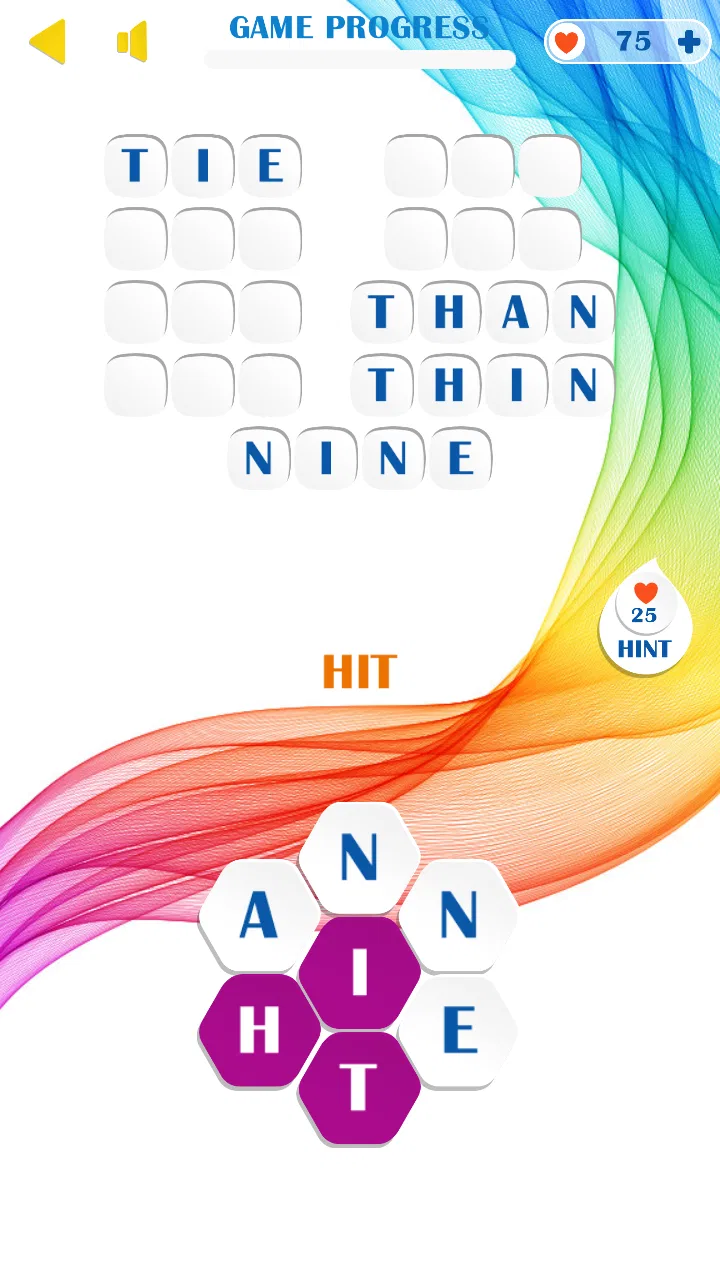
The basic interaction is approachable, which is important for a word puzzle aimed at a broad audience. I can open a board, inspect the letters, and begin experimenting without first studying a tutorial full of unfamiliar controls. The hexagonal layout also changes how I scan the board. Instead of reading only in straight horizontal lines, I pay attention to neighboring positions and possible paths, so the shape becomes part of the solving process rather than a decorative background.
That design is especially comfortable when I want a game I can pause mentally. I do not need to remember a complicated sequence of actions, and the central challenge remains visible on the screen. For a quick break between chores, I can make progress without committing to a long session. If I am more focused, I can slow down and examine the board for words I initially overlooked.
The developer, Second Gear Games, has kept the premise clear enough that the game works for different levels of familiarity with word puzzles. Someone who already enjoys finding hidden words will understand the attraction immediately. A less experienced player can also start casually, because the rules do not create a large barrier at the beginning.
What the game asks from the device
Because the core activity is a letter puzzle rather than an action game, my expectations for speed are different. I am not looking for rapid animation, detailed three-dimensional scenes, or constant background activity. What matters here is whether the board appears promptly, touch input feels dependable, and the game lets me return to the puzzle without unnecessary friction.
On a compatible phone or tablet, this type of design should feel much less demanding than visually intensive alternatives. The minimum operating-system requirement is Android 5.0, which makes the game accessible to a wide range of older Android devices. That does not guarantee identical behavior on every handset, but it does make Hexiwords a sensible candidate for a spare phone that cannot comfortably handle newer, heavier games.
I would still keep expectations realistic. A low operating-system requirement is not the same as a promise of perfect performance on every old device. Screen size, available storage, background activity, and the general condition of the phone can all affect comfort. A small display may make the connected-letter paths harder to inspect, while a larger tablet could make the board easier to read during longer sessions.
When a short puzzle becomes a longer session
The game is at its best when I treat it as a focused word-search activity. A single puzzle can be a quick distraction, but the same straightforward structure can also encourage me to keep looking after I have already found the obvious answers. That is where the mental rhythm changes: the first discoveries feel natural, while the final hidden words require more deliberate scanning and a willingness to revisit the board.
During heavier use, the main demand is likely to come from the player rather than the hardware. Repeatedly examining letter connections can be tiring, especially when I become convinced that a certain path must be correct and then discover that it does not lead to a useful word. I appreciate that this kind of difficulty is quiet rather than stressful, but it can still become mentally repetitive if I play for too long without a break.
My practical tip is to change the way I inspect the board instead of staring at it continuously. I might begin by following the most obvious chain, then switch to looking for unusual letter combinations or short connecting routes. Rotating my attention in that way helps prevent the common puzzle-game problem of seeing the same arrangement repeatedly without noticing anything new.
A useful routine for commuters and waiting rooms
Hexiwords fits naturally into small gaps in the day. I can imagine using it while waiting for an appointment, sitting on public transport, or taking a short break from work. The game does not require the emotional investment of a story game, and it is more active than simply scrolling through a social feed. It gives me a defined task that can be started quickly and set aside when the waiting time ends.
For that scenario, the most important advantage is concentration without pressure. I can work on a board for a few minutes, stop when my attention is called elsewhere, and return later to the same kind of word-finding mindset. Players who prefer games with timed rounds, live opponents, or constant rewards may not get the same satisfaction, but people who enjoy calm observation will probably understand its appeal.
It is also a reasonable choice for family use because the content rating is Everyone. That does not mean every child will find the puzzles equally easy, of course. Younger players may need help recognizing words or tracing connections, while adults may want a more challenging vocabulary test. Still, the broad age rating makes the game less restrictive than titles built around mature themes or aggressive competition.
Stability and returning to an unfinished thought
For a puzzle game, reliability is closely tied to continuity. If I am halfway through examining a board, I want to be able to leave and come back without feeling that the whole mental process has been wasted. The game’s uncomplicated format works in its favor here: there are fewer moving parts competing for attention than in a large online or action-oriented title.
My recovery expectation is therefore modest but practical. If I briefly switch to another task, I would want the game to return me to the puzzle rather than force me to relearn an elaborate system. That is the kind of everyday reliability that matters more to me than flashy presentation in this category. I would still avoid treating any mobile game as a substitute for manually saving important work, particularly when using an older phone with limited free memory.
There is also a useful distinction between technical stability and puzzle continuity. A game can run smoothly while a player still loses track of a promising word path simply because the session was interrupted. I recommend taking a quick mental note of the area you are exploring before leaving. That small habit makes returning easier, especially during a difficult board where several letter routes look similar.
How it compares with familiar word-game alternatives
Compared with a crossword, Hexiwords feels less dependent on clues and general knowledge. I am not solving a definition or filling a grid from a numbered list; I am examining the available letters and their relationships. That makes it a better fit when I want visual pattern recognition, while a crossword remains the stronger choice if I enjoy language trivia, precise clues, and longer written answers.
Compared with a traditional word-search puzzle, the hexagonal arrangement gives me a different scanning problem. A conventional grid encourages repeated horizontal, vertical, and diagonal checks. Here, the connected shape changes the way I move my eyes and consider neighboring letters. I would choose Hexiwords when I want the familiar comfort of hidden-word play with a layout that makes the search feel less routine.
It is also different from competitive word games that reward speed against another person. There is no reason for me to rush simply because someone else is waiting for an answer. That makes it more relaxing, but it also removes the social tension that keeps competitive players engaged. If your favorite part of a word game is beating a rival in real time, this will probably feel too solitary.
Where the experience may feel limited
The same simplicity that makes the game accessible can become its main weakness. Players who want a rich story, character development, elaborate goals, or a wide range of game modes should look elsewhere. Hexiwords is centered on finding words, so its pleasure depends heavily on whether that single activity remains satisfying over repeated sessions.
I also would not choose it for a person who dislikes trial and error. Some players enjoy testing a possible connection and learning from an incorrect assumption; others find that process frustrating when the board seems to hide the intended answer. The game favors patience and visual persistence more than quick decision-making, and that preference will strongly affect whether it feels rewarding.
Another trade-off concerns purchases. The game is free to download, while optional in-app items range from $1.99 to $19.99 per item. I would begin without spending anything and first decide whether the core puzzle loop holds my attention. That approach is particularly sensible for casual players, because the free entry makes it easy to evaluate the style before considering any optional purchase.
Version, access, and practical expectations
The current version is 1.0.2, so I would approach it as a relatively focused word-game release rather than a huge platform with years of accumulated systems. That is not automatically a drawback. A compact game can be easier to understand and less distracting, but it may not satisfy someone searching for endless variety or a deep progression structure.
Its release date was July 5, 2022, and the game has reached over ten thousand installs. The average rating is 4.8 from nearly four hundred ratings, which suggests that the people who have rated it generally enjoyed the experience. I treat that as encouraging rather than conclusive: ratings can indicate a good match for its audience, but they cannot tell me whether my own preference is for calm word searching or something more energetic.
From a resource perspective, the concept should be kinder to a phone than a graphics-heavy game, and the Android requirement supports that expectation. Even so, I would close unnecessary apps if my device is older or already struggling with general responsiveness. This is less about Hexiwords demanding unusual power and more about giving any puzzle game enough room to respond cleanly when I am tapping and tracing letters.
Who should install it, and who should skip it
I would point this game toward adults and children who enjoy hidden-word challenges, players looking for a quiet offline-style pastime, and anyone who prefers thoughtfulness over speed. It is particularly suitable for people who like to solve a small visual problem while waiting, relaxing before bed, or taking a break from more demanding work.
I would skip it if my priority were competitive multiplayer, a cinematic campaign, complex strategic planning, or a strong stream of new mechanics. I would also be cautious if I quickly lose interest in repeated word searches. In that case, a crossword app, a timed vocabulary game, or a broader puzzle collection may offer more variety and a stronger reason to return each day.
For families, I would let each player try a few boards rather than assuming the Everyone rating guarantees universal appeal. A child who enjoys spotting patterns may take to it immediately, while another may prefer a game with pictures or more direct feedback. The same applies to adults: a high general rating does not remove the personal question of whether this particular style of concentration feels enjoyable.
My performance verdict after regular play
My overall view is that Hexiwords succeeds by keeping its performance expectations aligned with its purpose. It is not trying to be a demanding visual showcase. Instead, it offers a focused letter activity that should suit compatible Android devices, including many older models, while giving the player a reason to slow down and inspect the board carefully.
The strongest practical benefit is its low mental setup cost. I can understand what I am meant to do, begin searching, and stop without feeling that I have abandoned a complicated mission. The most important limitation is equally clear: if the central word-finding loop does not hold my interest, there is little else here to compensate for that reaction.
I would describe the game as a good free starting point for anyone curious about hexagonal word puzzles. Try it before considering the optional purchases, use a larger screen if tracing connections feels cramped, and take short breaks when a board begins to blur into one repeated pattern. Those habits make the experience more comfortable and help reveal whether its calm, focused style suits you.
In the end, I recommend it to the right kind of player rather than to everyone. Hexiwords is most enjoyable when you want a small, steady word challenge that respects your time. It is accessible, gentle on the device by design, and easy to fit into ordinary routines. If that sounds better than a noisy or competitive alternative, Second Gear Games’ puzzle is worth trying.
FAQs for Hexiwords
01What is Hexiwords and how is the game played?
Hexiwords is a word puzzle game built around a hexagonal board, where you connect or arrange letters to create valid words. Its gameplay is easy to understand but becomes progressively more challenging as the available spaces, letter combinations, and objectives change. It is suitable for short sessions, although solving difficult boards can encourage longer play.
02Is Hexiwords free to download and play?
Hexiwords can generally be downloaded for free, allowing players to try the core puzzle experience without an upfront purchase. However, the game may include advertisements, optional in-app purchases, or paid features depending on the platform and version available in your region. It is worth checking the store listing before downloading if you want to understand the current pricing and monetization details.
03Does Hexiwords work offline?
Hexiwords may allow you to play at least some puzzle content without a continuous internet connection, which makes it convenient for travel or situations with limited connectivity. Nevertheless, an internet connection can still be required for advertisements, analytics, updates, cloud-related features, or purchases. For the most reliable experience, launch the game online first and verify which modes remain available offline.
04Is Hexiwords appropriate for children and beginners?
Hexiwords is generally approachable for beginners because its central idea is based on familiar word-building mechanics rather than complicated controls. It can also be useful for players who enjoy vocabulary practice and logical thinking. Difficulty may increase quickly, however, and younger children could encounter unfamiliar words. Parents should review the app’s age rating, advertising, and purchase settings before allowing independent use.
05What devices are compatible with Hexiwords, and does it require much storage?
Hexiwords is designed for mobile devices and may be available on Android, iPhone, or iPad, depending on the developer’s current release and regional availability. The game typically does not require the storage space associated with large 3D titles, but the exact download size can change through updates. Check the official store page for supported operating-system versions and the latest storage requirements before installing.
Pros
- Simple hexagonal layout makes word connections easy to understand.
- Short rounds are convenient for quick play sessions.
- Helpful hints reduce frustration when a puzzle feels difficult.
- Clean visuals keep the board readable on smaller screens.
- Word challenges can support vocabulary and pattern-recognition skills.
Cons
- Some puzzles may feel repetitive after extended play.
- Difficulty can vary noticeably between consecutive levels.
- Hints may reduce the satisfaction of solving puzzles unaided.
- Players seeking fast action may find the turn-based format slow.
- A stable internet connection may be needed for some features.

Hexiwords
Gallery